
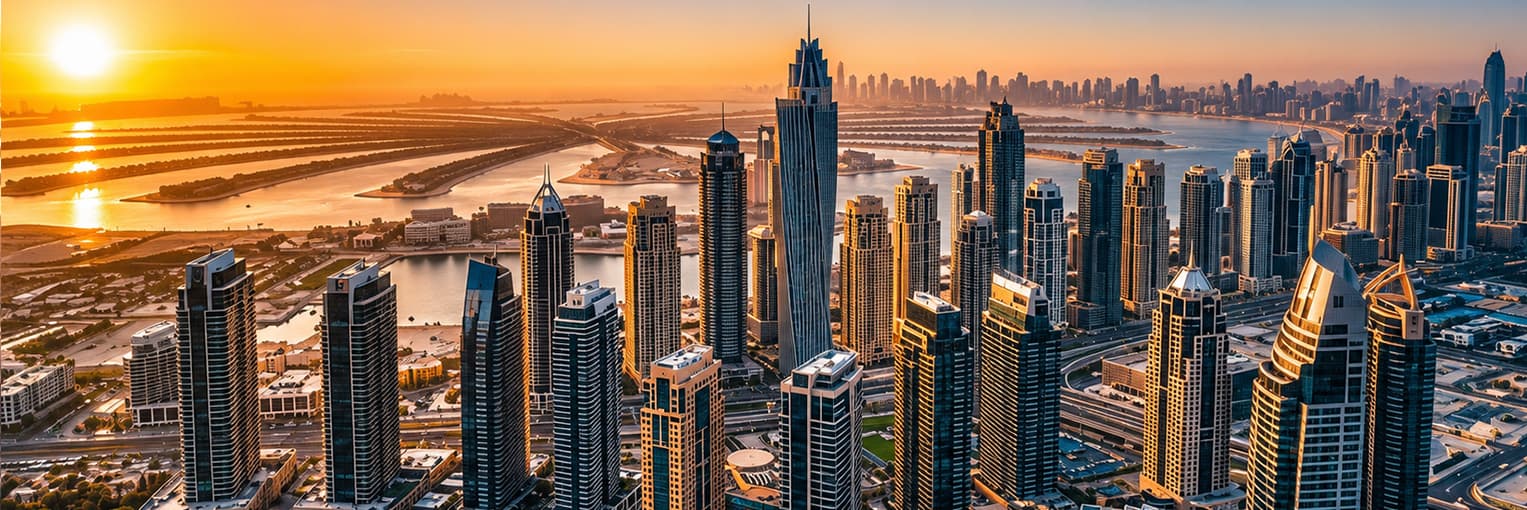
A practical guide to the opportunities, payment plans and risks buyers should understand before investing in an off-plan property in Dubai.
Dubai’s real estate market continues to attract buyers and investors from around the world. One option that remains popular in 2026 is off-plan property — buying a home before the project is fully completed.
For many buyers, the attraction is straightforward: access to new developments, structured payment plans and the possibility of buying at an earlier stage of a project’s development.
But off-plan does not automatically mean better.
With hundreds of projects competing for buyers, the real question is not simply whether off-plan property works in 2026.
It is:
Which project, at what price, with what payment plan and what future demand?
Here’s what buyers should consider.
1. Potentially Attractive Launch Pricing
One of the reasons buyers consider off-plan property is the opportunity to purchase during an earlier stage of a development.
Developers may launch projects with pricing designed to attract early buyers. As construction progresses, prices can change depending on demand, project progress and wider market conditions.
Buying early can therefore create an opportunity for future price appreciation if the project and location perform well.
But this should never be treated as guaranteed.
Before buying, compare the launch price with:
Similar completed properties nearby; Other off-plan projects in the same area; The developer’s previous projects; Expected future supply; The project’s location and connectivity
The important question isn’t whether the launch price looks attractive. It’s whether the property is fairly priced compared with its alternatives.
2. Flexible Payment Plans
Payment plans are one of the biggest attractions of Dubai off-plan property.
Rather than paying the entire purchase price immediately, buyers can often make payments according to the project’s construction schedule.
Depending on the developer, a payment plan may include stages such as:
Booking; Construction; Handover; Post-handover
This can make it easier to plan cash flow over time.
However, a payment plan should not be viewed in isolation.
Before committing, calculate the total amount you will need to pay and when you will need to pay it.
Also consider registration costs, service charges and other associated expenses.
A property with a convenient payment plan is not necessarily a good investment if the underlying property is overpriced.
3. More Choice Across Dubai
Dubai continues to see new residential developments across a wide range of communities.
Buyers can find everything from studios and apartments to villas and townhouses, with projects targeting different budgets and lifestyles.
Locations such as Dubai South, Dubai Hills Estate, Business Bay, Jumeirah Village Circle and Dubai Creek Harbour offer very different investment propositions.
That variety is an advantage — but it can also make the decision more difficult.
When there are so many projects available, choosing based on a brochure, launch event or attractive payment plan can be risky.
Instead, compare:
Location; Developer reputation; Construction progress; Price per square foot; Payment structure; Service charges; Expected rental demand; Existing and future competing supply
More choice makes proper comparison more important, not less.
4. New Homes and Modern Amenities
Off-plan developments are generally designed around current lifestyles.
Depending on the project, buyers may have access to facilities such as:
Swimming pools; Fitness centres; Landscaped areas; Children’s play areas; Parking; Community spaces; Retail and dining facilities
Another attraction is receiving a brand-new property after completion, rather than purchasing an older unit that may require renovation or upgrades.
For investors, modern layouts and amenities can also help a property appeal to tenants.
But amenities alone do not create rental demand.
A swimming pool or attractive lobby cannot compensate for a weak location, poor layout or excessive service charges.
The property needs to work as a whole.
5. Dubai Continues to Attract International Buyers
Dubai remains an important business, tourism and lifestyle destination.
People move to the city for employment, business, education and long-term living, creating demand across different segments of the residential market.
International investors are also able to purchase property in designated freehold areas, giving overseas buyers access to Dubai’s property market.
This international demand can support the market, but investors should avoid assuming that every property will perform equally well.
Dubai is the market. The individual project is the investment.
That distinction matters.
6. Off-Plan Can Suit a Long-Term Strategy
Off-plan property is generally better suited to buyers who are comfortable with a longer investment horizon.
After purchasing, an investor may need to wait until construction is completed before moving into the property, renting it out or considering a resale.
If the surrounding area develops and demand increases, the property may have the potential to appreciate over time.
Once handed over, it may also generate rental income if demand supports the expected rent.
But projected appreciation should never be the only reason to buy.
A proper investment assessment should consider:
Purchase price + payment schedule + ownership costs + expected rent + potential resale demand.
The numbers need to make sense before the future potential becomes relevant.
7. Dubai’s Regulatory Framework Provides Important Safeguards
Off-plan buyers should also understand the regulatory framework surrounding property development in Dubai.
Dubai Land Department states that payments collected from buyers for off-plan units are deposited into project-specific escrow accounts. The purpose of the escrow system is to regulate construction and help protect buyers’ interests.
That does not mean every off-plan investment is automatically low-risk.
Buyers should still verify:
The project and developer’s registration; The project’s escrow account; Construction progress; The sale agreement; Payment schedule; Handover conditions; Associated costs; The developer’s delivery record
The regulatory framework is an important layer of protection, but due diligence still matters.
The Risks Buyers Should Understand
Off-plan property can offer attractive opportunities, but it also comes with risks.
Construction timelines can change. Market conditions can move differently from expectations. Rental values may not reach projected levels, and future supply can affect both rental demand and resale prices.
There is also a difference between buying from an established developer with a strong delivery record and buying purely because a project has an attractive launch price.
Before committing, ask:
What happens if the market does not perform as expected?
A good investment decision should still make sense under reasonable assumptions — not only under the most optimistic scenario.
So, Is Off-Plan Still Worth It in 2026?
Yes — but not every off-plan property is worth buying.
Off-plan can make sense for buyers who want:
Flexible payment structures; Access to new developments; Modern properties; Exposure to developing communities; A longer investment horizon
But the quality of the investment depends on the specific project and unit, not simply the fact that it is off-plan.
The most important factors are:
Location — Does the area have genuine long-term demand?; Developer — Does the developer have a credible delivery record?; Price — Is the property competitively priced against comparable options?; Payment Plan — Does the schedule work with your actual cash flow?; Future Supply — How many competing properties are likely to enter the market?; Rental Demand — Who is likely to rent the property after handover, and at what realistic rent?; Exit Strategy — Who is likely to buy or rent the property from you later?
The Crest Gate View
Off-plan property can be a powerful way to enter Dubai’s real estate market.
But buying off-plan should never be about buying the newest launch simply because it is new.
There will always be another project, another payment plan and another launch price.
The real work is comparing them.
At The Crest Gate, we believe the decision should start with the numbers — not the brochure.
We compare the developer, location, pricing, payment plan, service charges, rental potential and future supply before helping you decide whether a property actually makes sense.
We don’t develop the property. We help you decide which one is worth buying.
Final Thought
The best off-plan investment is not necessarily the project with the biggest launch campaign or the most impressive amenities.
It is the property that fits your budget, investment objective and long-term plan — at a price that makes sense.
Buy the right property, not just the right launch.
Looking to invest in Dubai? Let’s compare the numbers before you decide.